Showing posts with label philanthropy. Show all posts

Thursday, September 12, 2013

Informed Giving, a different type of Preparedness

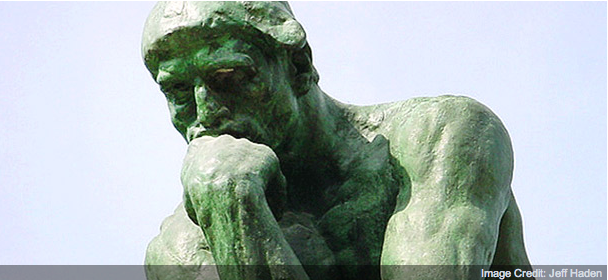
Engage brain when donating
Up to this point the focus has been on promoting personal preparedness: disaster kits, the innovative ways people are integrating preparedness into everyday life, etc. But there's a side to preparedness that hasn't been discussed and one that isn't usually brought up, it has to deal with being informed on who you're giving your donations to--being a responsible donor.

I've posted some of the ads that push individuals to donate cash in the wake of a disaster because it's flexible, timely, and responsive to the changing needs a community faces. While that's an important message, it's only a small piece of the larger picture to help provide guidance on informed giving.

When articles like: The 50 Worst Charities are published, they prey on the fears of being taken advantage of, the fear that an unknown organization is going to misappropriate your donation. And because I hope you're grabbing your checkbook more than your disaster kit, it's important to feel good about the organizations you're donating to, so here are some tips and resources to help you begin your informed giving education:

Unrestricted Funding is not a bad thing (usually). Nonprofit organizations use unrestricted funds to pay salaries, to keep the lights on, and generally everything that doesn't fall under program expenses. While the topic of unrestricted funding is far more nuanced, the thing to remember is this: if you make a donation to an organization, do it in a way where you can detail how your donation is to be spent. If you want your money to go towards creating a jacuzzi for stray animals, expressly communicate that when making your donation, if you don't, then your donation will end up in a general fund (usually). Again, general or unrestricted funds aren't bad, in fact they are a necessity, but when you think your money is going one place and it's actually going somewhere else and you find out...you feel lied to. example: Moore, OK

Results, what are those? What was accomplished with your money? Holding nonprofits accountable for how your donation is spent means asking questions and following up to make sure they follow through. While writing a check gives you the option of quieting your tormented conscious and moving on, resist that urge and stay engaged and see how your organization of choice chooses to communicate it's activities and their results--doing this may change your view of your nonprofit of choice.

Don't be afraid of new organizations. Yeah, I said it. I've met more people who just started doing stuff following an event than I can count. While their lack of experience usually leads to problems in other aspects of response, the money they receive is usually spent the minute they get it. There's usually no rhyme or reason to how it's spent, oftentimes whatever is needed at the time is where your money goes. It may go to one family in the form of a cash donation so they can cover a car payment, or it may go to the purchasing of tools and contractor bags for volunteers, etc...Chances are your reporting will come in the form of Facebook updates and tweets but you'll know what they're doing with it. Good for people who aren't afraid to take risks and those who want an immediate impact made with their donation.

Community Foundations. These oft overlooked entities are local grant making institutions that existed prior to the event, and are usually involved in the Long Term Recovery of their community (when money is needed to cover financial gaps for a homeowner). Their involvement and knowledge of local needs can be an asset when looking to ensure holistic community recovery. They are already setup to take tax deductible donations and did I mention that they're local?

While being local is good, Community Foundations can be slow to act because of their unfamiliarity with disaster response and recovery and are more susceptible to local politics. Be that as it may, they are a great and lesser known option in the sea of nonprofits.

Do Your Homework. There are resources available that provide information on a wide range of nonprofits: Charity Navigator, the Better Business Bureau, Guidestar, and Great Nonprofits.org. Each of these sites provides different metrics by which to evaluate a nonprofit organization. You can find salaries, 990's, reviews from past volunteers, etc...Just like you wouldn't throw your money into the garbage or on something you don't want, you shouldn't give to an organization just because it's easy.

There are so many great organizations out there deserving of your donations that with a little work and an understanding of the kind of programming you want to support, you can be introduced to a lot of great organizations that will gladly put your money to use while you put your mind at ease.

Tuesday, August 20, 2013

Do a little, change a lot. The Future of Philanthropy?

Google announced a few days ago the launch of their charity app 'One Today.' The premise is simple, choose from a list of organizations on the app and donate a dollar towards that cause--easy. Think of it like an indiegogo or kickstarter page for charities except with the tacit endorsement of our friends at Google...although Google will deny that they endorse any charity they promote.


Nonprofits looking to post projects need to be a member of google for nonprofits first, once that happens, an organization can be featured on the app. In looking for more information it turns out that a 1.9% fee is taken on each donation and that unless directed otherwise, your donation will go towards the organization's general fund--meaning they can do whatever they want with it.
"The nonprofit will get all of your donation except the payment processing fee of 1.9%, so for every $10 donated, the nonprofit receives $9.81. Unless mentioned otherwise, your donation goes into unrestricted funds that will be used by the nonprofit at its discretionOne Today partners with Network for Good, an industry leader in Donor Advised Funds, to collect money from donors and disburse it to nonprofit recipients. For each transaction that you approved, you will see a line item on your credit card receipt, with the label GOOGLE *One Today NfG." (http://www.google.com/onetoday/faq.html)
While I like the fact that lesser known organizations have the potential to gain exposure through this app, I'm not the biggest fan of a processing fee being taken on every donation given the fact that this app exists to serve the organizations it features. I would suggest that if you find an organization that you like via 'One Today' that you give directly to that organization, that way 100% of your donation goes to them...and remember to specify where you'd like your donation to be spent if you're not comfortable with it going into a general fund.

Aside from some of my misgivings around the business practices that make 'One Today' run, I don't know how I feel about this app and its potential impact on how donors give: Will encouraging individuals to give micro amounts change how they feel about philanthropy in general? Will donors place less importance on a donation of $1 vs $100, and if they do, will that somehow alleviate the burden on the nonprofit to report on their impacts and be accountable to donors because it was only a buck?

Don't get me wrong, I think 'One Today' has the potential to open doors for lesser known nonprofits and help them gain exposure, but wonder if/how pushing a model of micro donations will impact the overall landscape of philanthropic giving.

Thoughts?

Tuesday, July 9, 2013

'Liking' your way to impact


Social Media is a powerful tool; it has the ability to sway public opinion and shed light on issues that would otherwise never see the light of day: Kony 2012 anyone?

According to the Chronicle of Philanthropy, donations to the charitable sector stood at 2% of the gross domestic product and posited that if everyone gave up a morning coffee, $220-billion more could go to charity on a yearly basis. Easy, direct, and something that won't break the bank...but we're not doing it...why?

Because social media, has created a "new" way for individuals to feel like they're making a difference-through likes and retweets. The buffer that the social media sphere has created insulates many from actually doing...as a result, liking something on Facebook or getting something retweeted is the new way of defining impact...what I don't understand is, how can you claim impact when a 'like' doesn't really do anything.

While exposure to a message is good, as Unicef so cleverly illustrates, it means nothing if there is no action to back it up. The awareness generating machine that is social media can quickly create exposure for a cause or group (Kony/Invisible Children), however, the goal of the charitable sector is creating impact and change, and that can only be accomplished through action, and likes or retweets aren't designed to do that.

So why, if likes and the social currency generated from them, are doing little to actually advance the missions of charitable organizations, is so much time and energy being placed on getting more of them? When you read about the US State Dept spending $630,000 on Facebook likes, it makes you wonder, to what end? Are those likes influencing foreign policy? Do they really matter? Couldn't that money have been better spent elsewhere?

Some social media campaigns like tweetathons, or text to give, when successful, generate revenue, a clear cause and effect relationship that enables groups to continue carrying out their mission. The success stories while few and far between offer a foundation upon which growth and lessons learned can be derived from. However, with the ubiquity of social media, taking a stand no longer means sticking your neck out and running the risk of being associated with an issue by attending a protest, rally, community meeting, etc...it means changing your profile picture to this:

While supporting issues you believe is important, and social media enables broad exposure, what are you actually doing? Are you writing your congressperson? Are you donating money to support the causes that align with your societal views? Are you Volunteering your time to causes that make you warm and fuzzy? My guess is no...and therein lies the problem.

Social media is making it so that everyone is a brand, and how we market our brand has become more important than what we stand for. As Nilofer Merchant, from the Harvard Business Review so succinctly puts it: "Your Brand is the Exhaust Fume of the Engine of Your Life."