Showing posts with label HUD. Show all posts

Wednesday, October 2, 2013

Govt shutdown and disaster response

I talked about the new reality we face as practitioners in yesterday's post, the world where more frequent and stronger weather-related events impact greater numbers people than ever before. Well a new wrinkle has been added to our unique operating environment--a partial government shutdown. The impacts of this shutdown will take time to fully understand, but I've read a lot of conflicting reports about what this means exactly to community response and recovery.
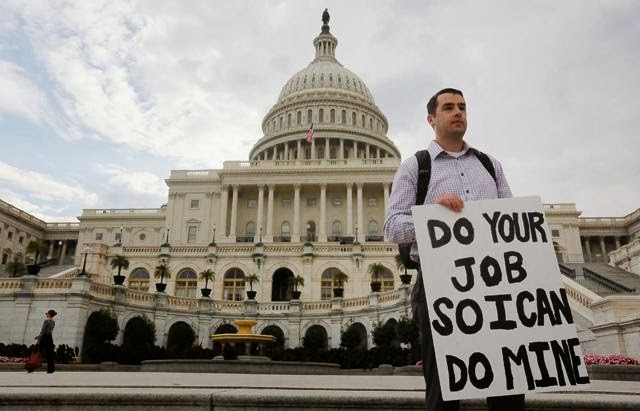
Source: Larry Downing/Reuters
FEMA
There's a worry about whether FEMA-related programming will continue, and the answer is, yes they will i.e. Individual Assistance and Community Development Block Grants (CDBG). And according to Dan Watson, a spokesman for FEMA:
“There are more than 1,000 FEMA workers on the ground in Colorado responding to the floods. They are not being impacted by the shutdown."
So there will be the administrative personnel to ensure that the recovery machine keeps moving. This brings a sigh of relief to the residents in Colorado who are beginning to understand the impact the floodwaters had. Colorado State government on the other had will spend between $40-$80,000/day keeping 120 National Guardsmen focused on the rehabilitation of critical infrastructure that would otherwise have stopped.

However, for the city of Moore, OK the shutdown looks like it could delay a 4 Million dollar reimbursement check FEMA needs to cut for reimbursing cleanup costs. And for those on the east coast, the shutdown looks like it will slow down the dispersement of available grant funds fueling long term recovery. Even though money has been allocated for Sandy Relief, there's the problem with staffing. For instance, of the 749 employees in HUD's Community Planning and Development office which handles grants to cities and states for recovery, only 13 employees will go to work everyday during the shutdown. Long Term Recovery is a slow process to begin with when fully staffed and all the kinks worked out, I believe the reduction in staffing will have a ripple effect that will be felt for months to come and work against the gains made in advancing recovery in communities impacted by Sandy.

Because funding for long term recovery comes from a diverse range of federal entities, making exceptions to keep people working in the various agencies on behalf of impacted communities during the shutdown would've required a herculean effort that did not materialize. It seems that disaster specific dollars are available, the question that remains is whether or not there are enough people to provide the oversight needed to keep things moving.

Environmental Protection Agency
You can't have disasters without some sort of environmental impact, which is why the EPA plays a critical role in helping to define what that impact is and how best to address it.

The EPA states that those who are engaged in activities that:

"ensure continued public health and safety, including safe use of food and drugs and safe use of hazardous materials; those who protect federal lands, buildings, equipment and research property; those who conduct law enforcement and criminal investigations; and those who provide emergency and disaster assistance" will continue working.
While good to know, it remains unclear at this time as to whether or not the work the EPA was doing in Colorado to define the extent of the potential environmental impacts the floodwaters had on the Fracking wells continues or not. With 94% of the EPA's employees not working and reports that the amount of oil spilled as a result of the flooding has topped 40,000 gallons, I sincerely hope that the EPA has boots on the ground. 

I don't know about you, but I'm not overcome with a sense of calm, I guess it's because I keep thinking about what would happen should another event take place? Say a major hurricane makes landfall, would FEMA be able to deploy resources? In theory, I imagine they would because the funds used to implement PA/IA programming come from the Disaster Relief Fund; however, actually implementing those programs may be impossible due to furloughed personnel. 

Partial or total, a shutdown of our government will have serious ramifications that impact communities recovering from disasters--I hope that common ground can be found so the business of helping communities recover can begin in earnest once again.

Friday, August 9, 2013

Renters vs Owners

Disasters indiscriminately destroy whatever is in their path; its unbiased destruction puts many on equal footing regardless of socioeconomic status. While it's true that vulnerable populations tend to be disproportionately impacted by disasters, a flood doesn't care how much money you make, and where a tornado touches down has nothing to do with the strength of your investment portfolio. So if the damage caused by these community altering events doesn't discriminate, why do we when we respond?

Look pretty similar to me
Once the dust settles, the rush is on to cleanup and get back to the new normal; however, it's during response/recovery activities that something strange happens, organizations will choose to help one family over another. Of course every organization has the right to determine how they prioritize need based on their mission, but the result is that some families don't receive assistance as quickly because they rent and don't own their homes.

Now when I say "help," I refer to the cleaning and debris removal that needs to be done following an event. I understand that renter's have every opportunity to buy insurance for their belongings, but because they don't own the property, they are seen differently in the eyes of some response organizations.

This differentiation has to do with three factors:
  1. Liability. Finding the property owner to get a release signed so volunteer groups can safely and legally work on the property.
  2. The perception that Rental Properties are Income Properties and as such it is the responsibility of the landlord to take care of their tenant needs--not voluntary resources.
  3. Slumlords / Absentee Landlords. There is a general reluctance to help those individuals continue to profit from their questionable business practices.
Liability
There that word is again...who knew trying to help people could be so litigious. In order for groups to use Volunteers, they need to ensure that everyone on site has signed a release of liability and that the homeowner has signed one as well. Oftentimes trying to find and schedule a time when the landlord can meet to sign the necessary paperwork is difficult if not impossible, which is why many renter's are passed over.

Income Properties
Rental properties are income generating properties, this is true, and a myopic view in my opinion. Just like there are butcher's and accountants, there are landlords, people who make a living off renting property. When someone who has several rental properties in a community and all of them are impacted, two things happen: 1) The livelihood of the landlord is put at risk and 2) There are fewer housing units in that community for displaced people to go. 

Slumlords
This is a difficult situation; based on my experiences I've noticed that undocumented families tend to live in units where absentee landlordism is usually the case...as a result, a lot of help that could be given is not because of fear on part of the family and a reluctance on the part of organizations to help a landlord who clearly has no interest in upkeep on their properties.

While renter's are not completely without options, with SBA providing low interest rate loans up to $40,000 to help repair or replace damaged personal items, it still doesn't address the hurdles renter's face in order to receive assistance following disasters.

If a community has surplus rental units available, the issue of re-location for many renters can be dealt with; however, what happens to renters and homeowners in a community like Minot, ND? Minot suffered a critical housing shortage before flooding impacted their community in 2011 displacing the majority of the town. A real consequence of a scenario like this can be that the fabric of a community can dissolve due to families moving to other states and areas where housing stock is available. In the case of Minot, FEMA built temporary housing units, but the lack of housing in rapidly growing communities is a real concern given the challenges renters face when trying to recover from disaster.

I feel that this is something that communities don't realize will be an issue until it's too late, but am unaware of it being a part of the larger community resilience conversation. Regardless of who holds the deed, those four walls and a roof provided more than just shelter for a family, they provided stability and a base to grow this 'whole of community' movement. And while I don't have a clear idea of the steps that need to be taken to bring clarity to this issue, I hope that the groups who work in homes regardless of ownership status continue to do so, as they are providing a great service to help communities fully recover.